Time and Expenses: Flexible Time Card Periods
In MYOB Acumatica 2026.1.1, flexible time card periods give you greater control over how employees report time across your organization. You can now align time cards with weekly, biweekly, semi-monthly, or monthly payroll cycles—and even assign different frequencies to different employees.
Time Cards That Match Your Payroll Cycles
- Flexible time card periods that match your payroll processes
- Per-employee frequency settings
- Improved consistency between time card and time activity frequencies
Improved Organization of Time and Expense Settings
You can now find the settings on the Time and Expenses Preferences (EP101000) form more easily due to their improved organization.
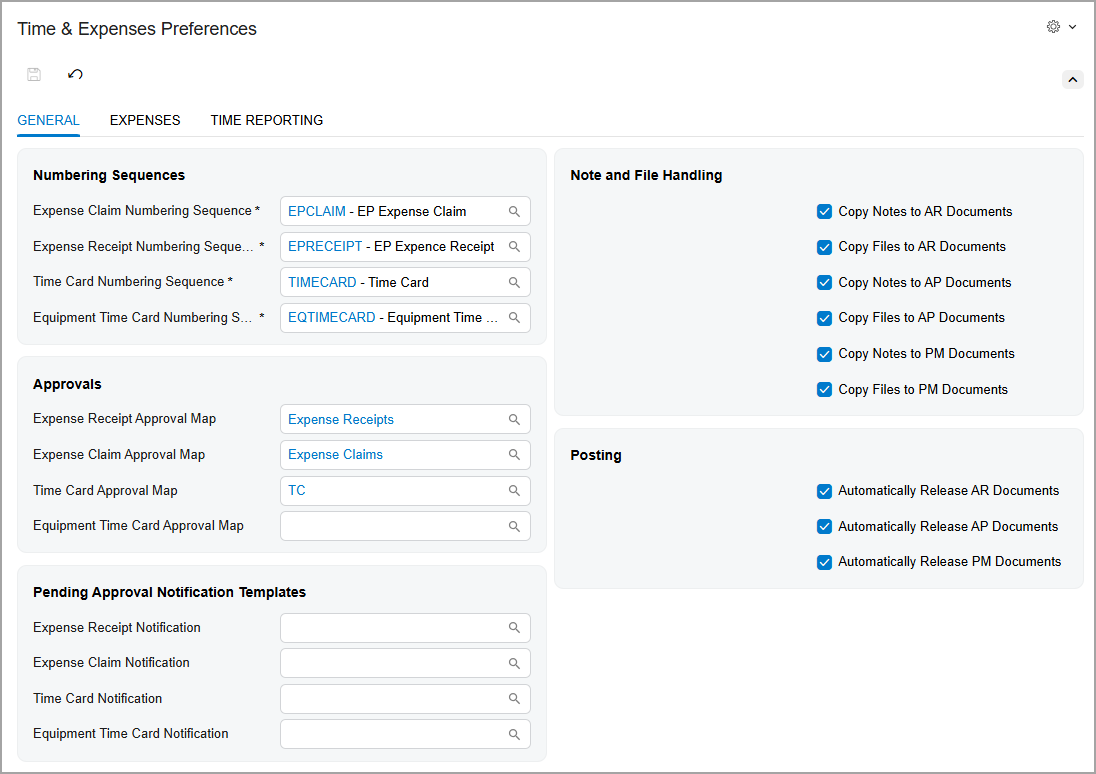
The General tab includes the sections shown below.
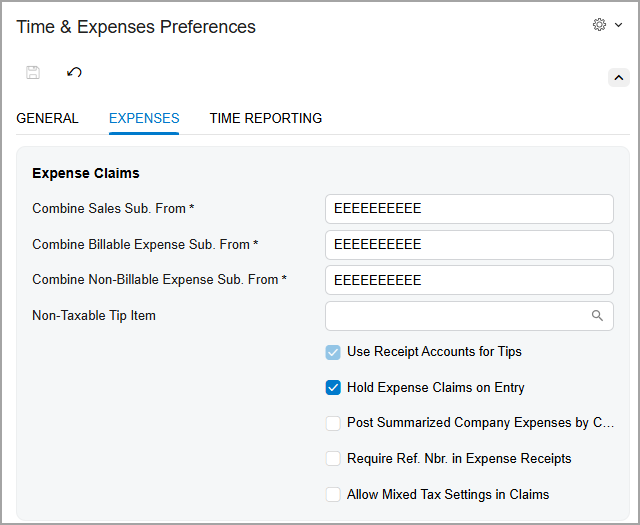
The Expenses tab, which has only one section, appears when the Expense Management feature is enabled on the Enable/Disable Features (CS100000) form.
The Time Reporting tab includes the sections shown below.
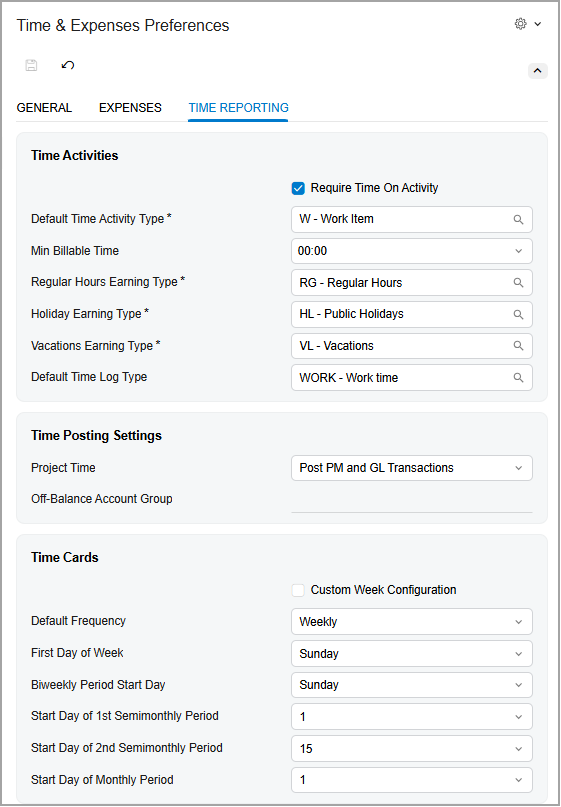
To support the creation of time cards with different frequencies, a system administrator specifies the following settings in the Time Cards section of the Time Reporting tab:
- Default Frequency: Monthly, Semi-monthly, Biweekly, or Weekly
- First Day of Week: The day of the week
- Biweekly Period Start Day: The day of the week
- Start Day of 1st Semimonthly Period: The day of the month
- Start Day of 2nd Semimonthly Period: The day of the month Important:The difference between the start days of the first and second semi-monthly periods must be more than 10 days and less than 20 days.
- Start Day of Monthly Period: Any day of the month
The frequency settings, which can be changed at any time, apply to entities created after the changes are saved as follows:
- Default frequency: Applies to new employees
- Start date of time card periods: Applies to time cards and activities
Managing Employee Time Card Frequency
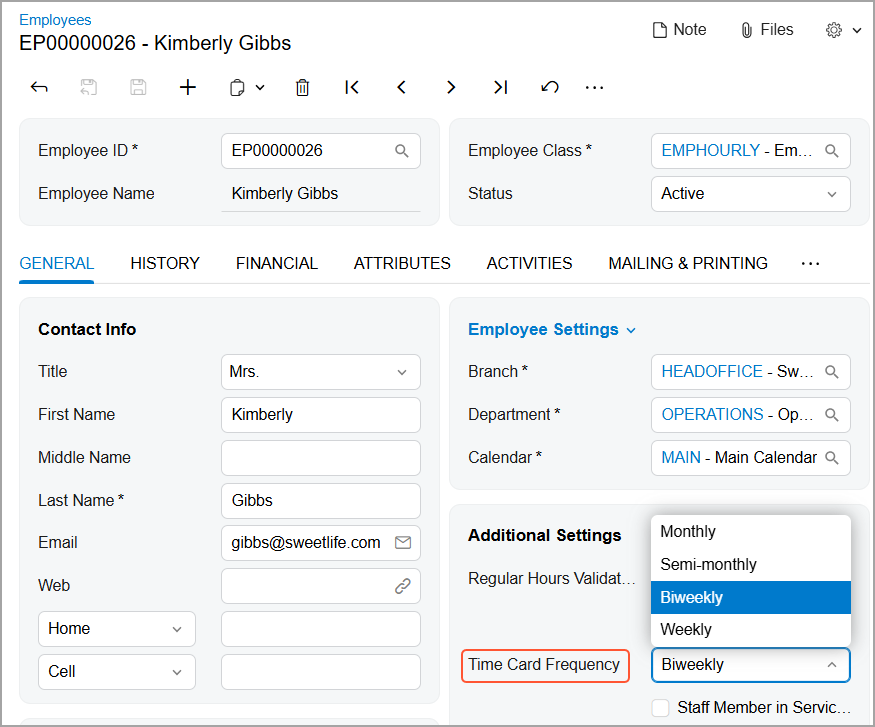
By default, the system populates the frequency settings for new employees by using the settings on the Time and Expenses Preferences (EP101000) form. If your company uses different payroll periods for different employees, you can assign a time card frequency to each individual employee on the Employees (EP203000) form. This frequency applies to time activities and time cards created for this employee.
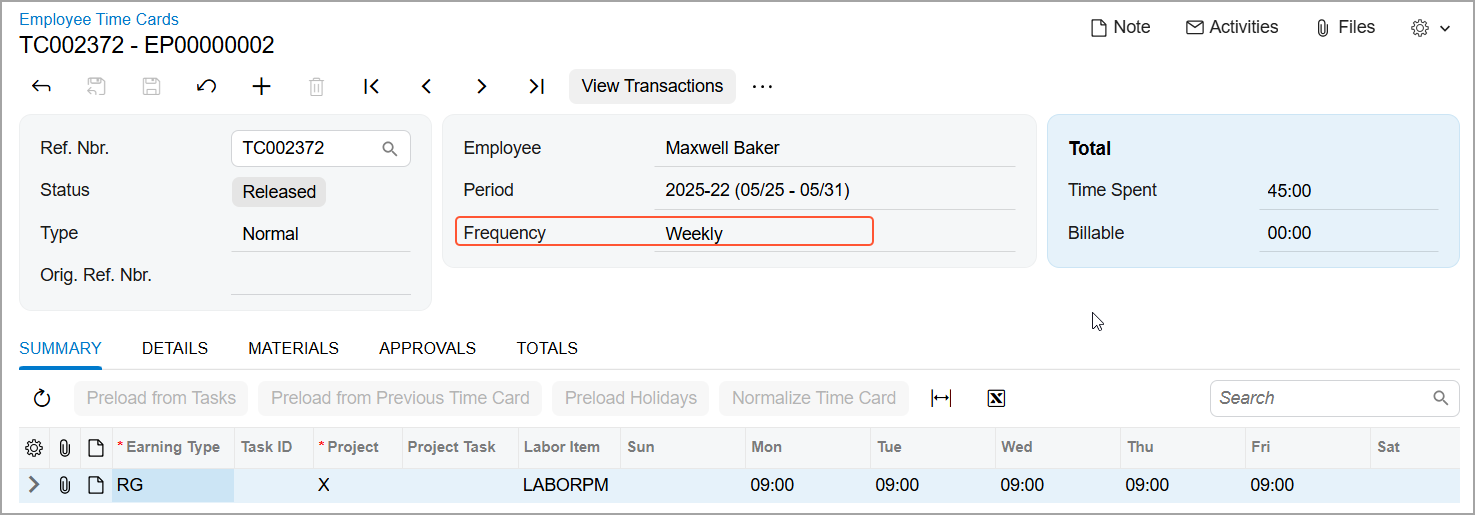
When you create a time card for an employee, select a period in the Period box of the Employee Time Cards (EP305000) form. The list of available periods corresponds to the frequency that is selected for the employee on the Employees form. This frequency is also displayed in the Frequency box of the Employee Time Cards form, as shown below.
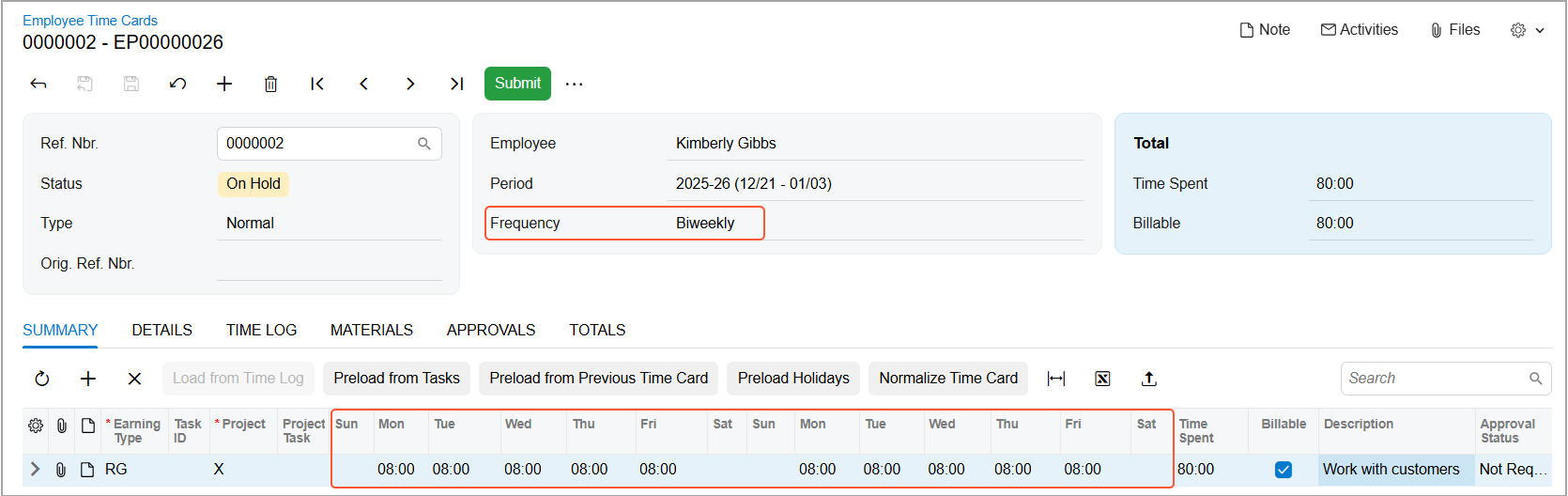
On the Summary tab of the Employee Time Cards form, the number of columns showing days depends on the following:
- The employee time card frequency. In the example below, the Biweekly frequency is selected, so the time card has 14 day columns.
- The frequency settings specified on the Time and Expenses Preferences (EP101000) form.
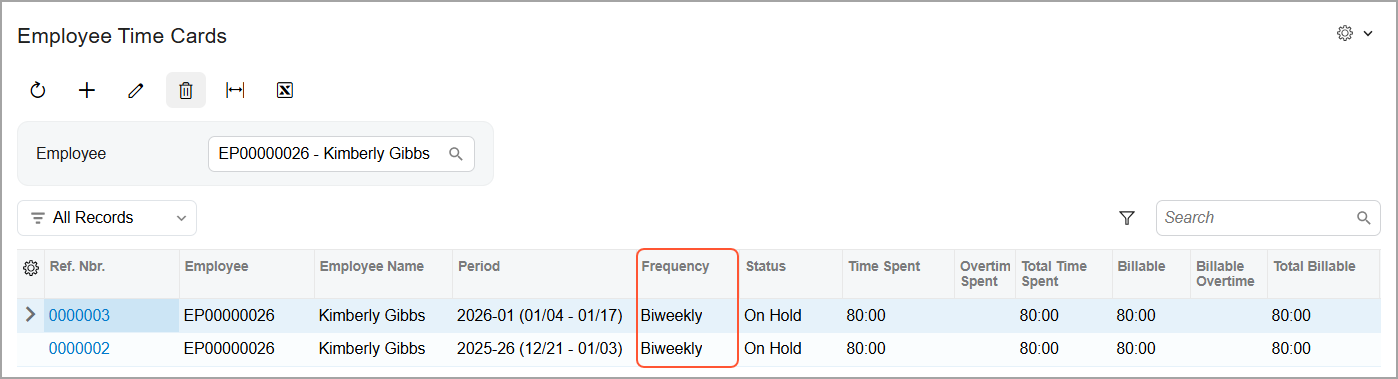
You can also view the time card frequency on the Employee Time Cards (EP406000) and Release Time Cards (EP505010) forms.
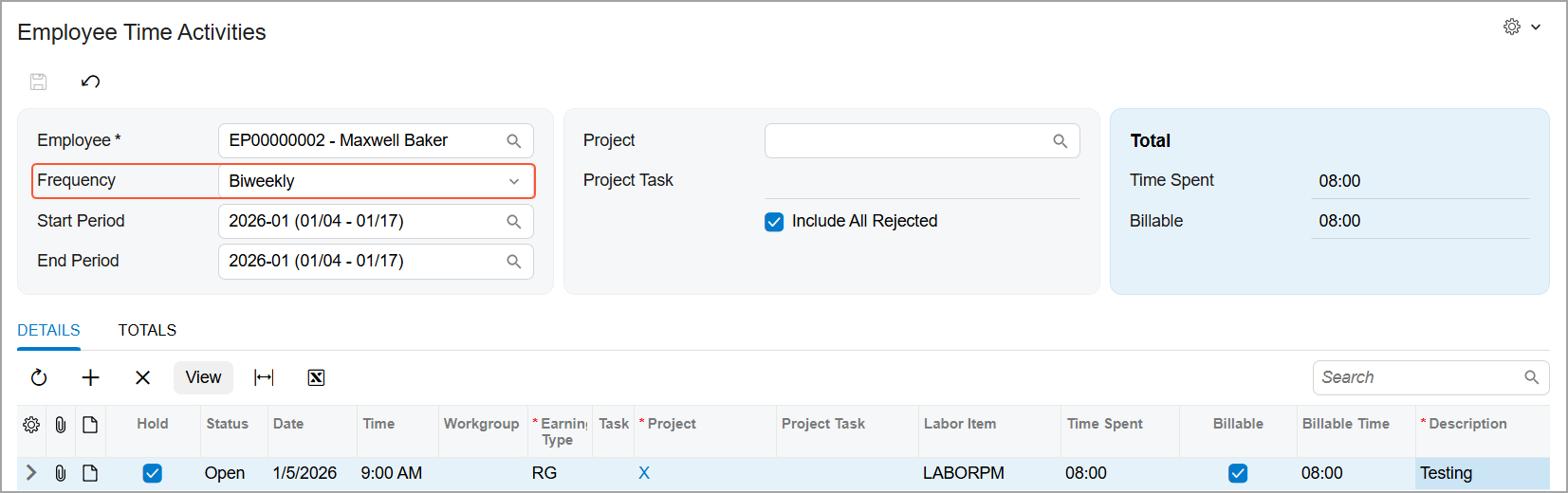
When you create a time activity on the Employee Time Activities (EP307000) form, the frequency specified in the employee’s settings is inserted by default; you can change it for this activity. An employee time card shows an existing time activity only if the time activity frequency matches the time card frequency.
You can create a time activity on the Weekly Crew Time Entry (EP307100) form only for employees with the weekly time card frequency.
When you use the MYOB mobile app, you can see the time card frequency on the Employee Time Cards screen and in the corresponding list of records.
Approving Summaries of Time Activities with Different Frequencies
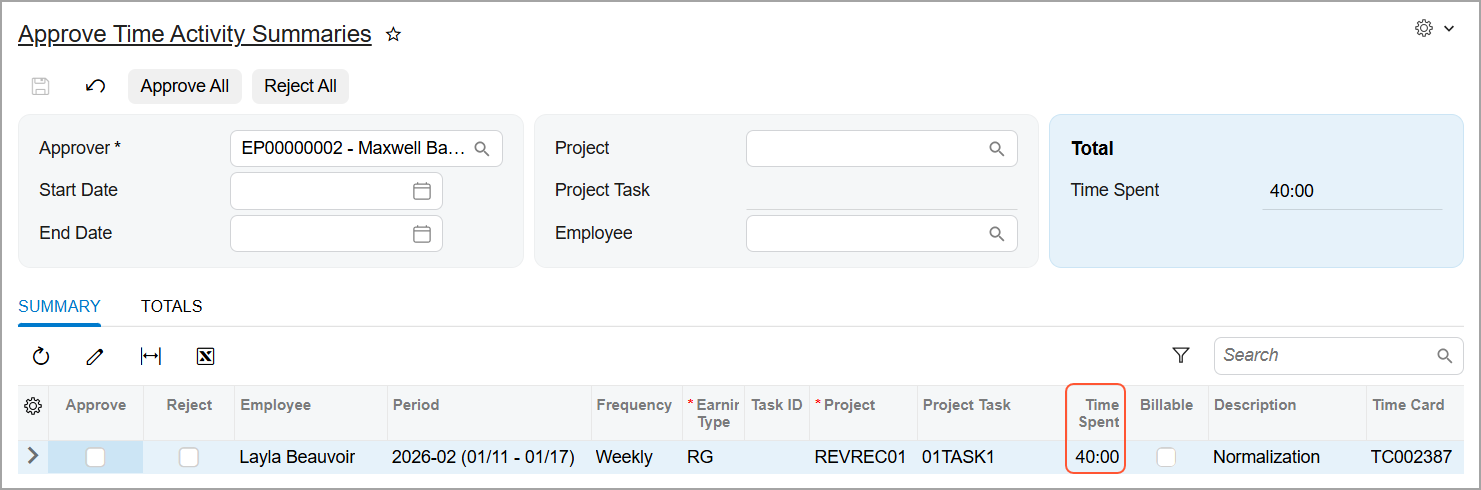
When you narrow the list of time activity summaries on the Approve Time Activity Summaries (EP507030) form by date range, a time activity summary appears if at least one day in its date range matches the specified date range on the form, regardless of its frequency. For time cards with a frequency other than weekly, only the total time spent is calculated, as shown below.